

Extra chairs take up more room than they’re worth and always seem to stick out at odd angles. A bench tucks in tight and fits more people in the same space. These 9 dining room bench ideas show how different homes do it.
9 Dining Room Bench Ideas for Round Tables, Window Walls, and Tight Corners
A bench seats more people than chairs do, because nobody needs elbow room between each seat. It also keeps a room from feeling busy, since a low bench takes up less visual space than a row of chair backs.
The ideas below cover live edge slabs, painted frames, curved seats, and built-ins. Each one comes with the one move that makes it work.
Matching Legs Tie the Set Together
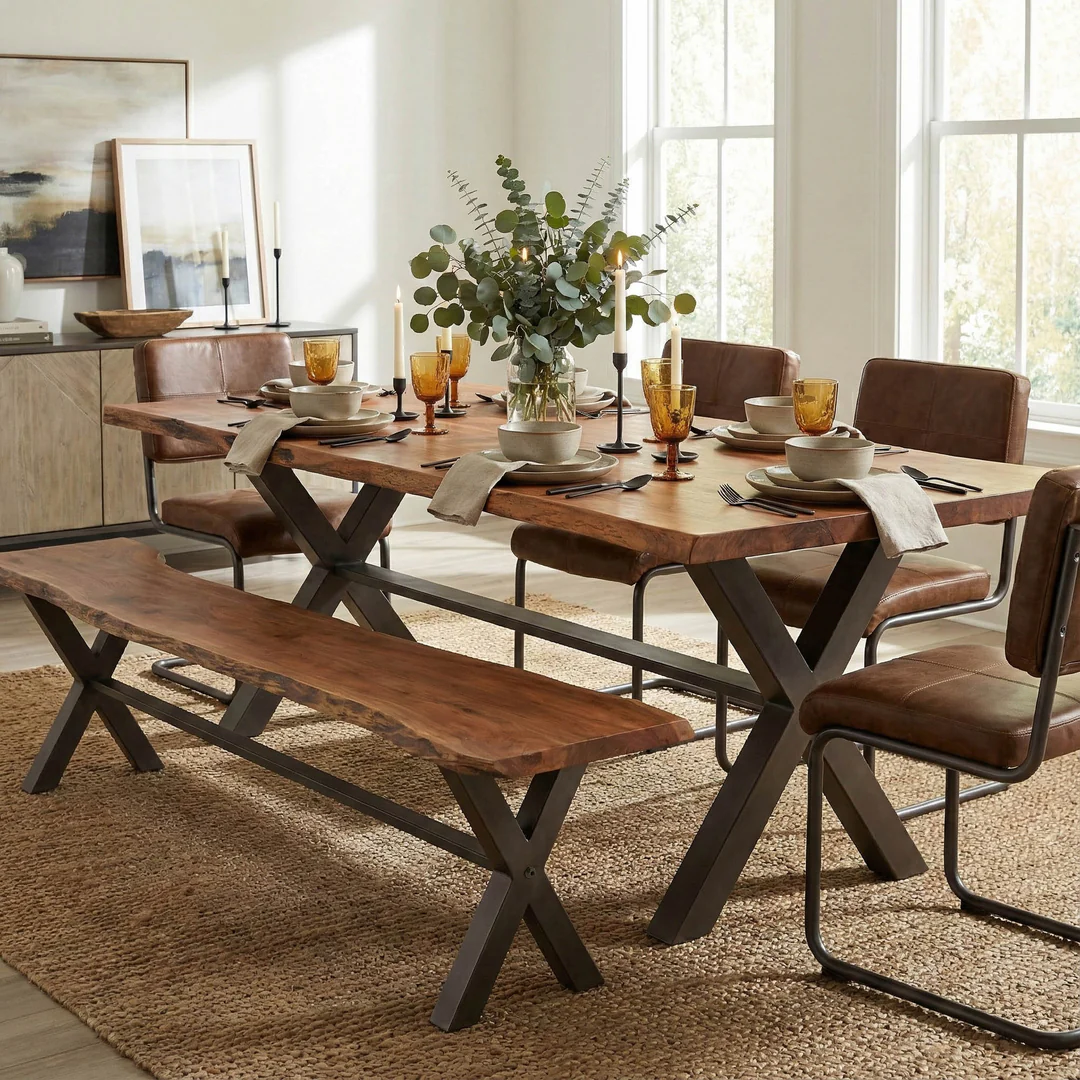
Live edge means the wood keeps its natural, uneven outer edge instead of being cut straight. The bench here repeats the table’s grain, rough edge, and black X-shaped legs, so the two read as one set. Brown leather chairs on the other sides soften all that wood. Buy the bench and table together if you can.
Wrap One Side of a Round Table
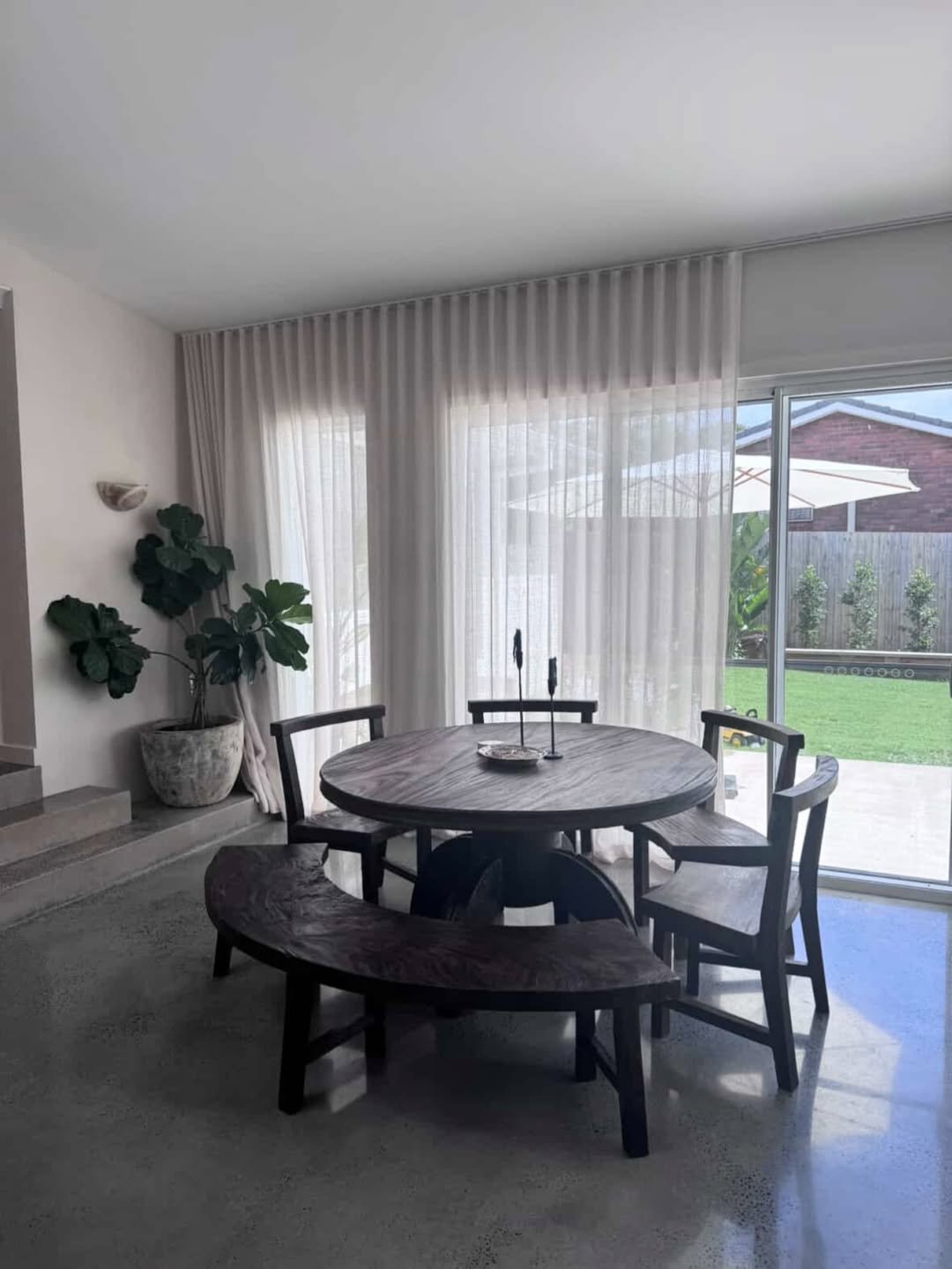
A straight bench leaves awkward gaps against a round table, so this one curves to follow the edge. Everyone sits closer together, and the arc takes up less floor than a row of chairs. Dark wood on the table, bench, and armchairs lets the rough grain stand out, while sheer curtains behind keep the corner light.
Use the Window Wall for Seating
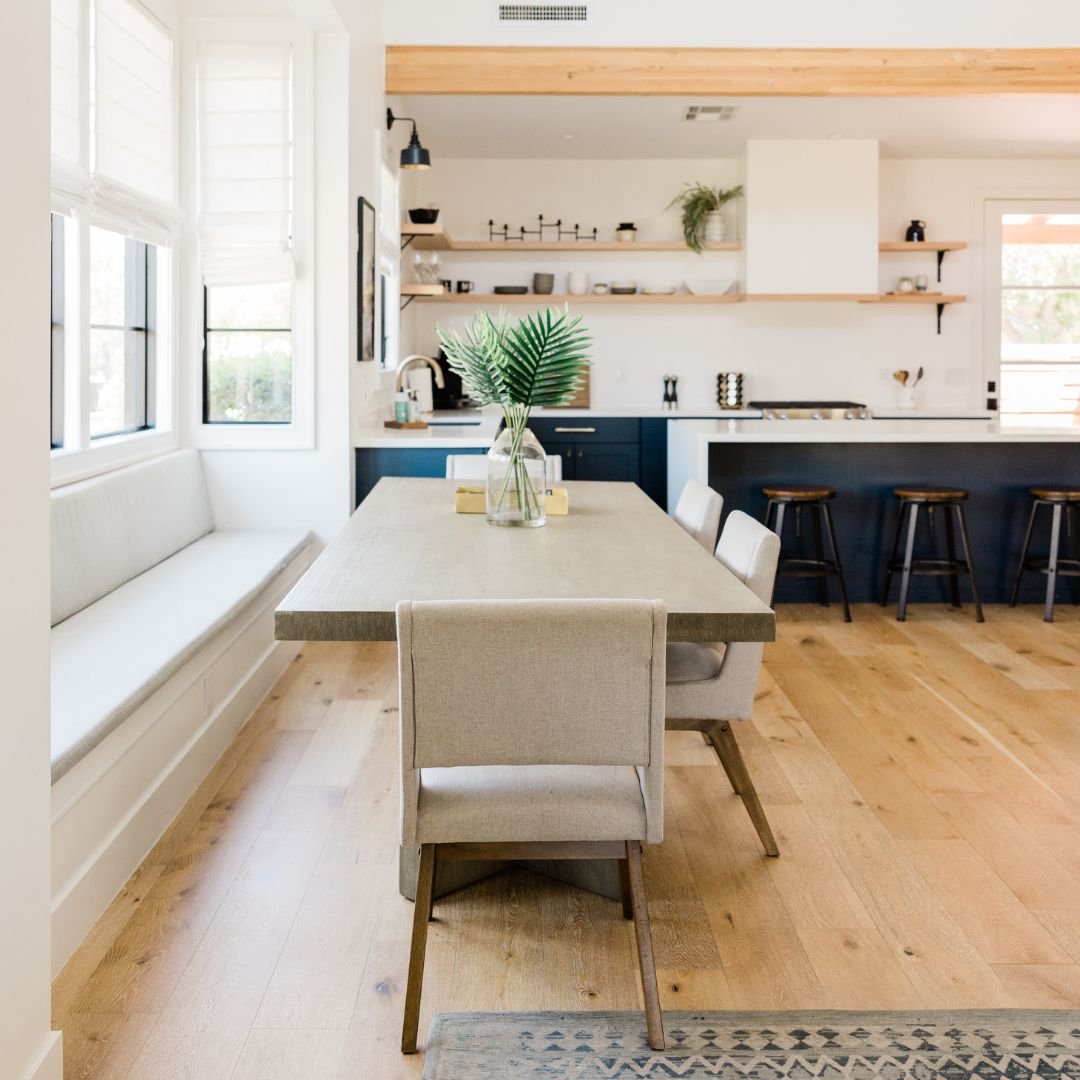
Pushing a long cushioned bench up under the windows gives you seating along one whole side of the table, so you need fewer chairs. Here it’s built in and painted white to match the trim, so it looks like part of the house. Keep the cushion a light neutral so it blends with the oatmeal chairs.
A Bare Corner Becomes a Dining Spot
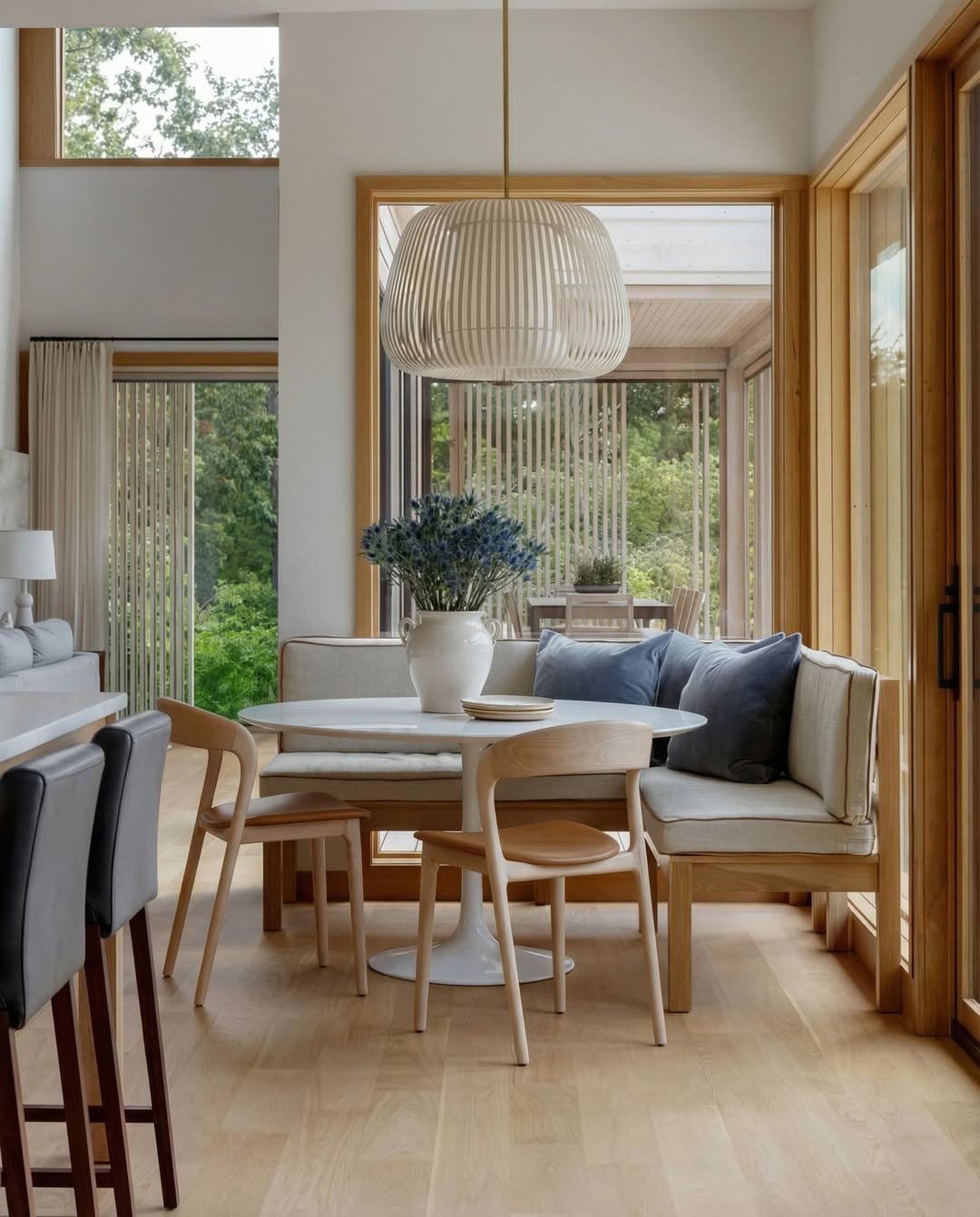
A banquette is a bench with a back, built along two walls like a booth. The L shape here tucks everyone into the corner, and the round table on one center stem leaves room for knees. Lift-up lids or drawers under the seat add storage, and this guide to organizing cabinets helps you sort what goes inside.
Let the Bench Be the Showpiece
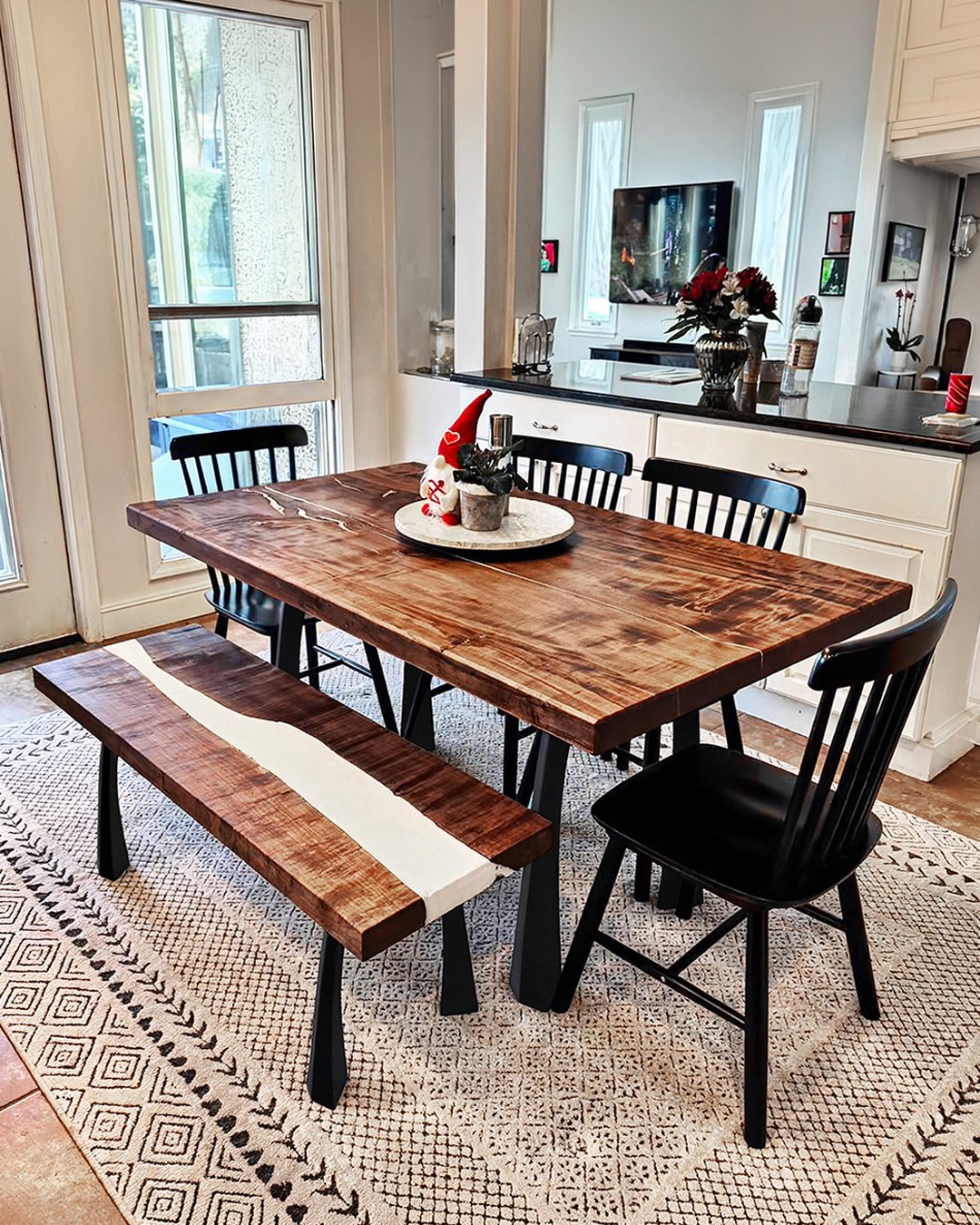
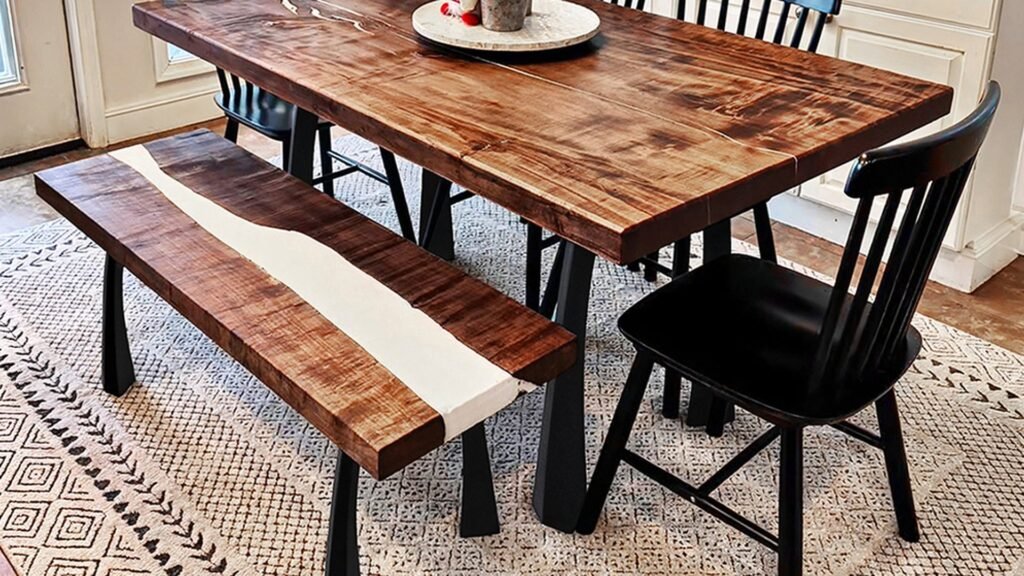
That white stripe winds through the bench like a river in the wood, and the table repeats it in thin white veins. Black spindle-back chairs, with thin vertical slats, and black legs frame the dark wood, while the cream rug keeps the floor light. Pair a bold bench with a simple table and it does the decorating.
Match the Wood, Mix the Chairs
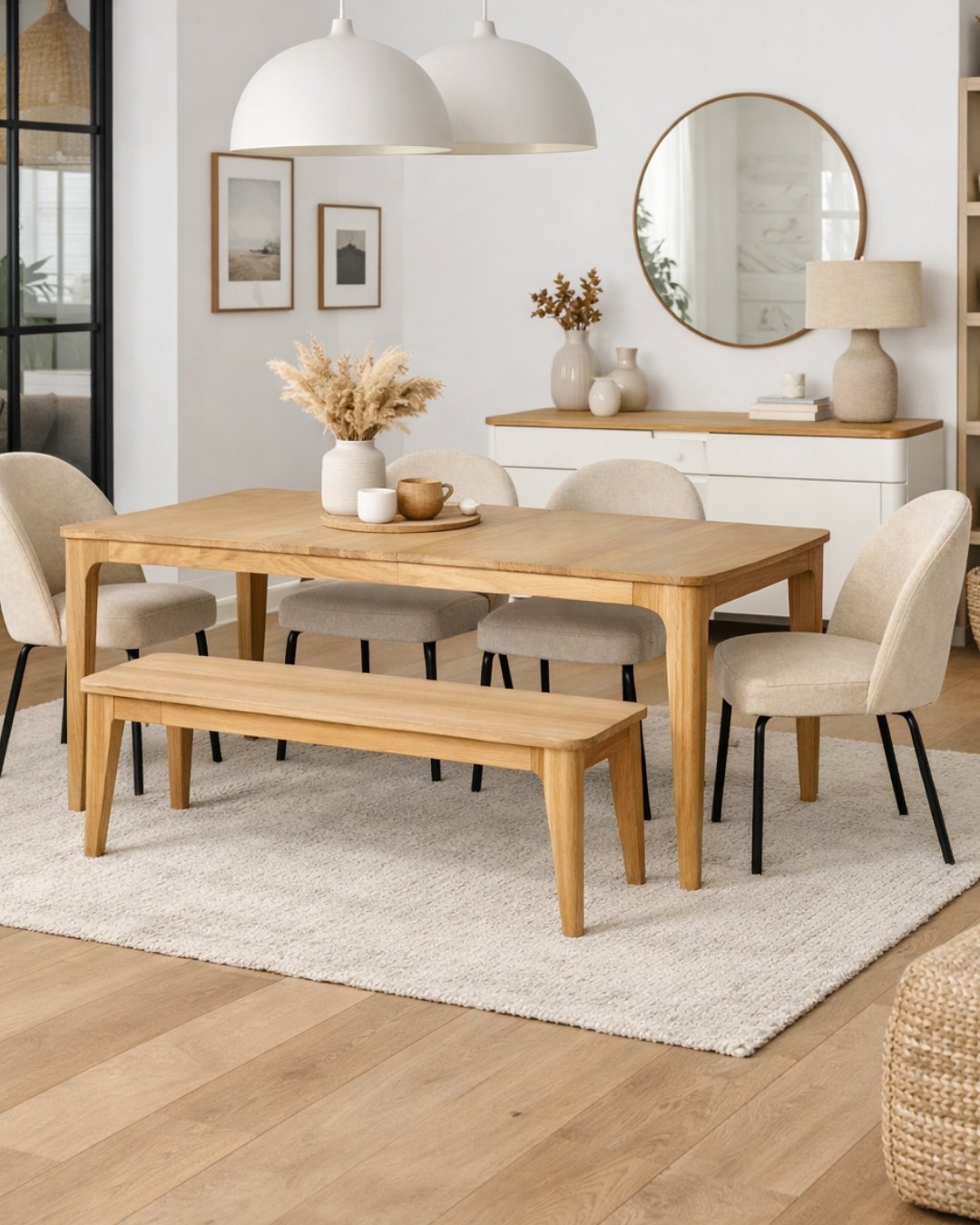
Why does a mix of chairs work here? The table and bench stay one light oak with rounded corners, so the beige and warm gray seats can vary without a fight. Pampas grass in a ribbed vase and a round mirror over the white sideboard add height. Nobody bumps a sharp edge walking past either.
Keep a Small Space Feeling Open
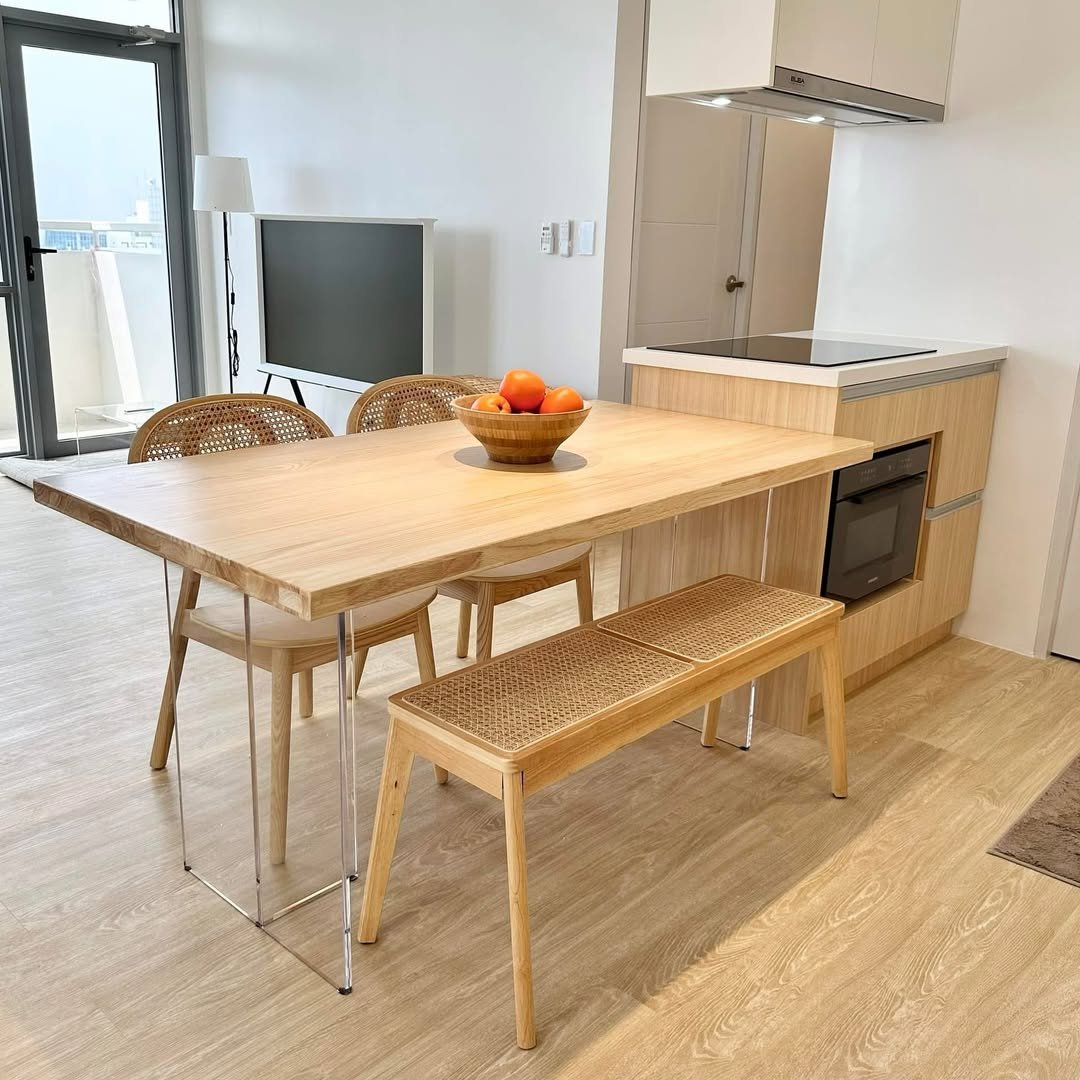
Clear acrylic legs let you see straight through to the floor, which keeps a table this close to the kitchen cabinets from looking bulky. The bench has cane, the woven webbing found on vintage chairs, set into its seat, and it echoes the chair backs. Tuck it under the table when you need floor space.
Paint the Frame, Keep the Wood Top
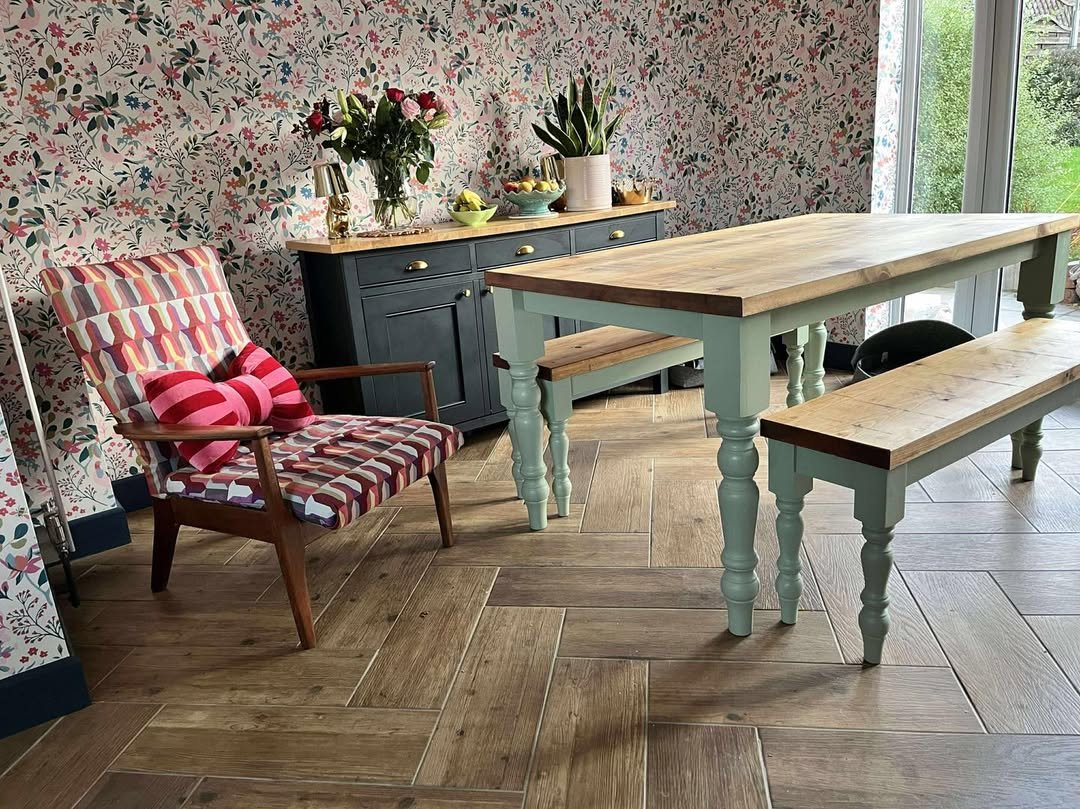
Turned legs, the rounded, spool-shaped kind, give this set an old-house feel, and sage green keeps it from looking stuffy. Only the frames are painted, so the wood tops stay warm. The soft green also calms the floral wallpaper and patterned armchair nearby. More of that style lives in our Victorian style kitchen roundup.
Dark Built-Ins Make a Pale Table Pop
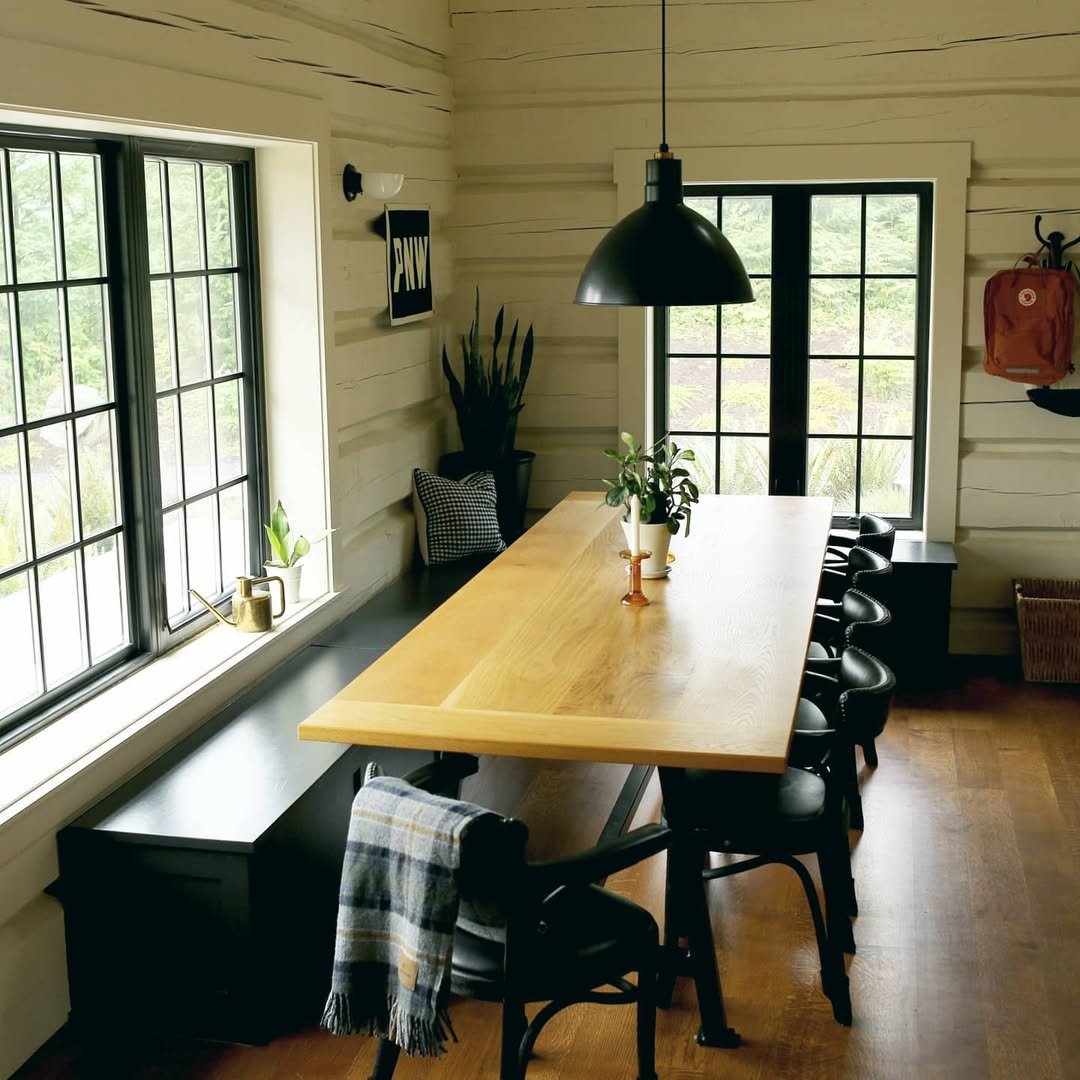
Picture a rainy weekend with a full table and no folding chairs. A black built-in bench runs under the windows and turns an unused wall into seating, and its box-style base can hold storage too. It frames the pale wood tabletop, and a houndstooth pillow and plaid blanket keep all that dark from feeling cold.
