

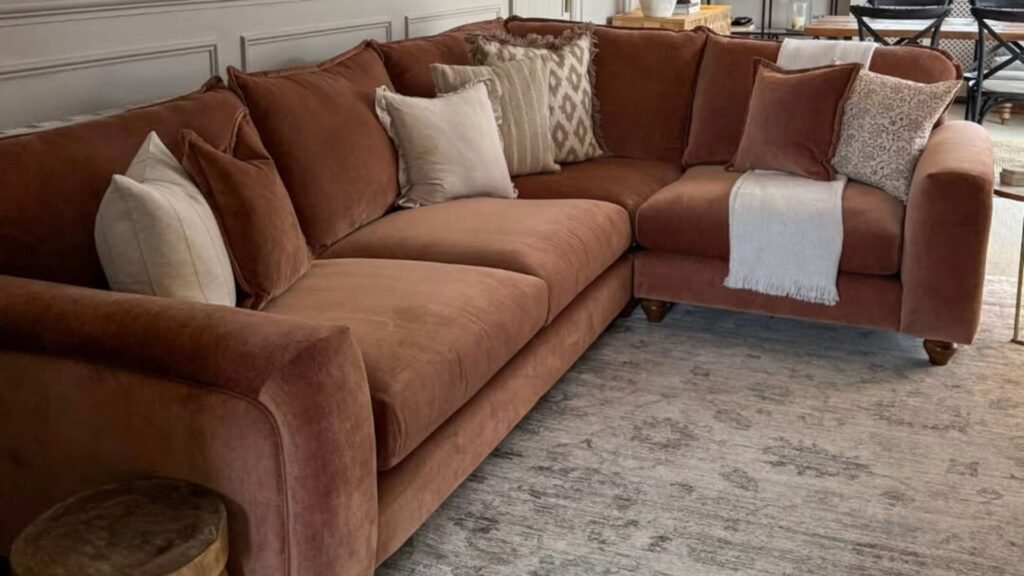
A corner sofa is the biggest thing in the room, so its fabric does more work than any pillow or throw. These 8 corner sofa design ideas show how corduroy, velvet, and soft woven fabrics look in real living rooms. Each one comes with a move you can copy.
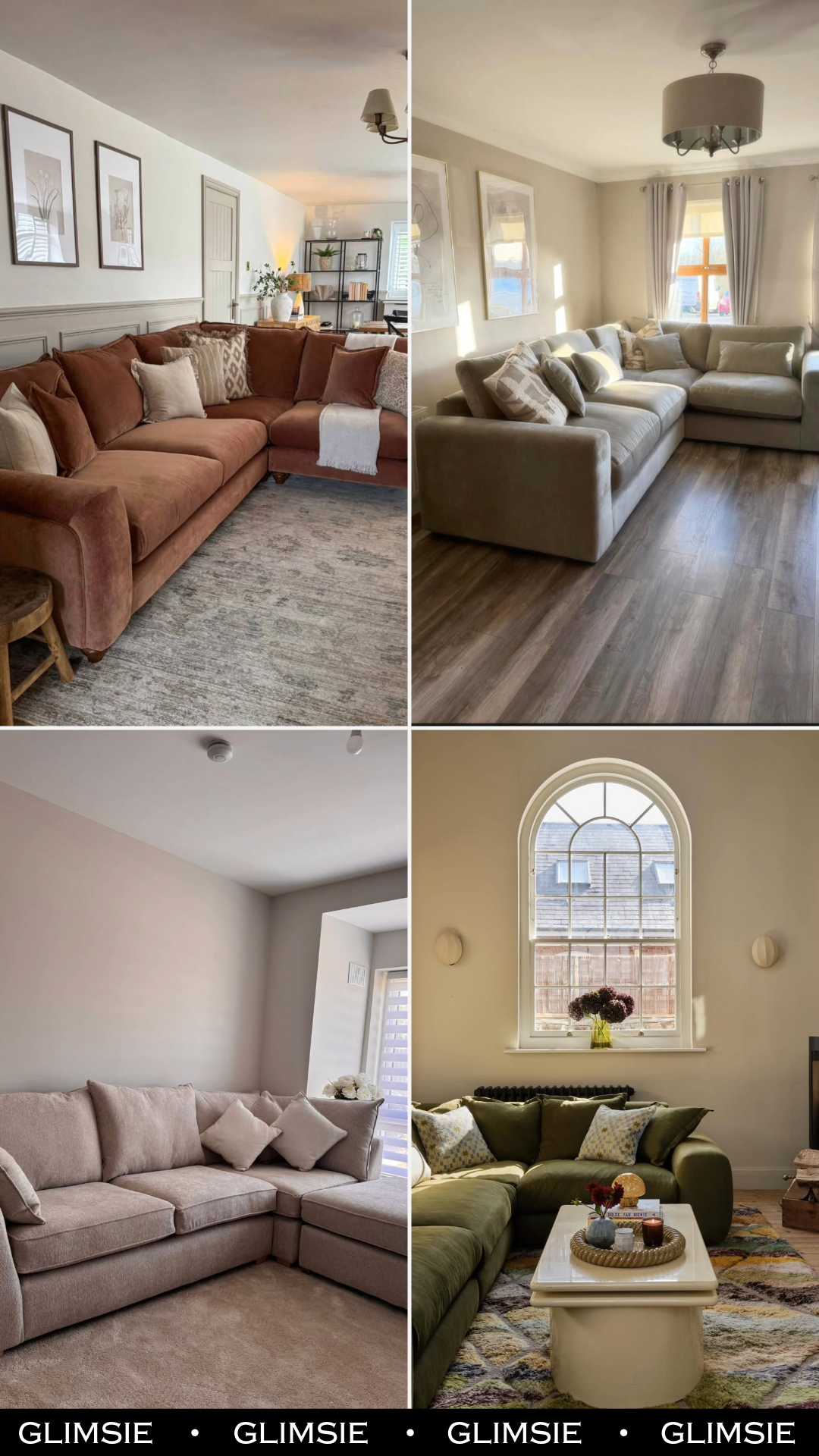
8 Corner Sofa Design Ideas in Corduroy, Velvet, and Soft Woven Fabrics
Shopping for a corner sofa usually starts with size and shape, and the fabric gets picked last. These rooms flip that order, and each sofa’s fabric sets the tone: ribbed corduroy, crinkled velvet, or a woven fabric flecked with light and dark threads.
Some are styled from the rug to the ceiling light, and one still has a bare wall, so you can see what a sofa does on its own. Along the way you’ll spot which rugs, wall colors, and frames pair well with each fabric.
Four Textures in One Color Family
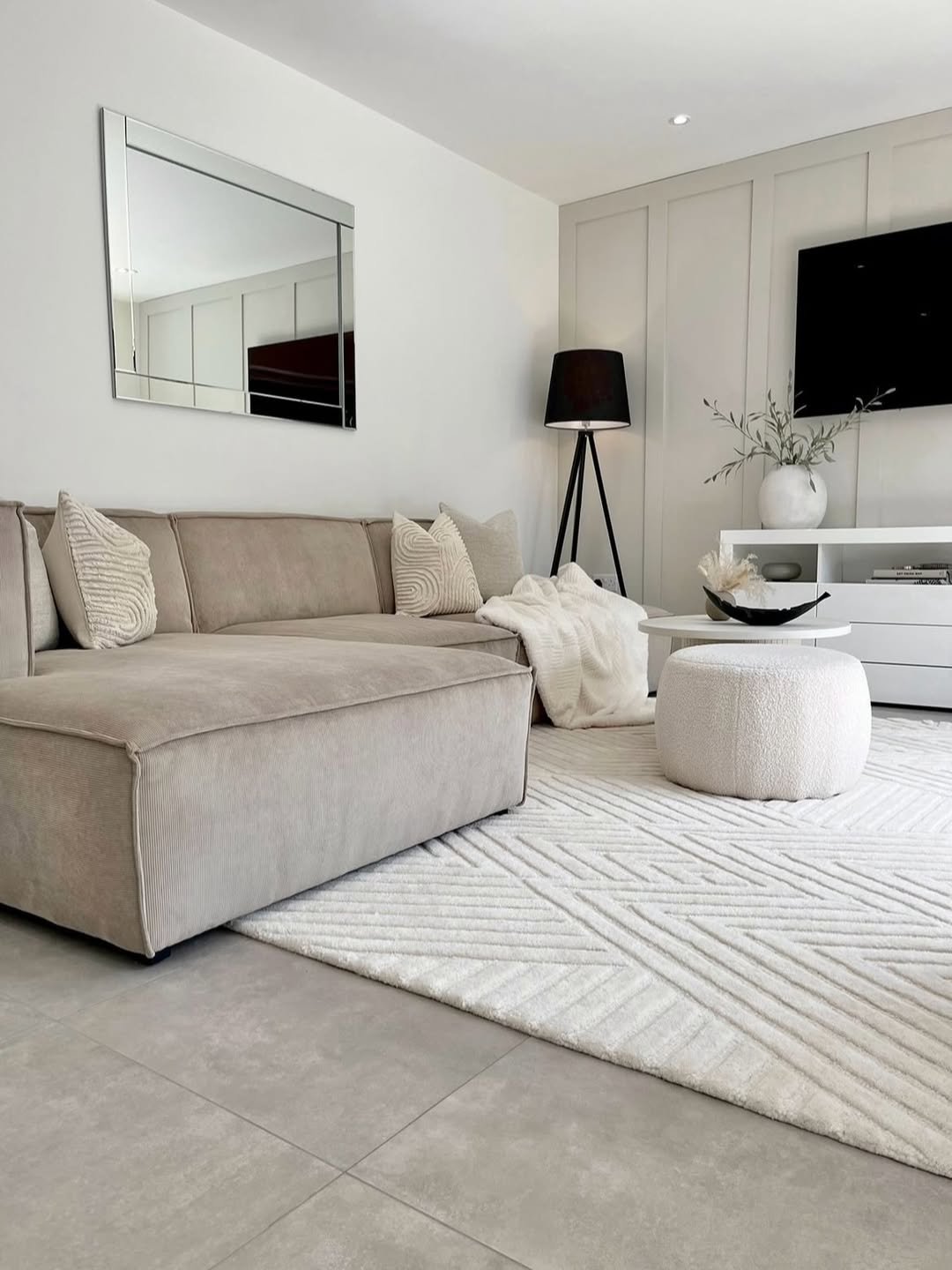
Ribbed corduroy in a soft stone shade carries this sofa and its long lounge end, and the room backs it up with a nubby white pouf, a fluffy throw, and a rug with raised zigzag lines. Same color, four textures, so nothing looks flat. Try it by picking three textures in one color family, then add one black piece, like that tripod floor lamp, so your eye has somewhere to land.
Keeping a Big Sofa From Looking Flat
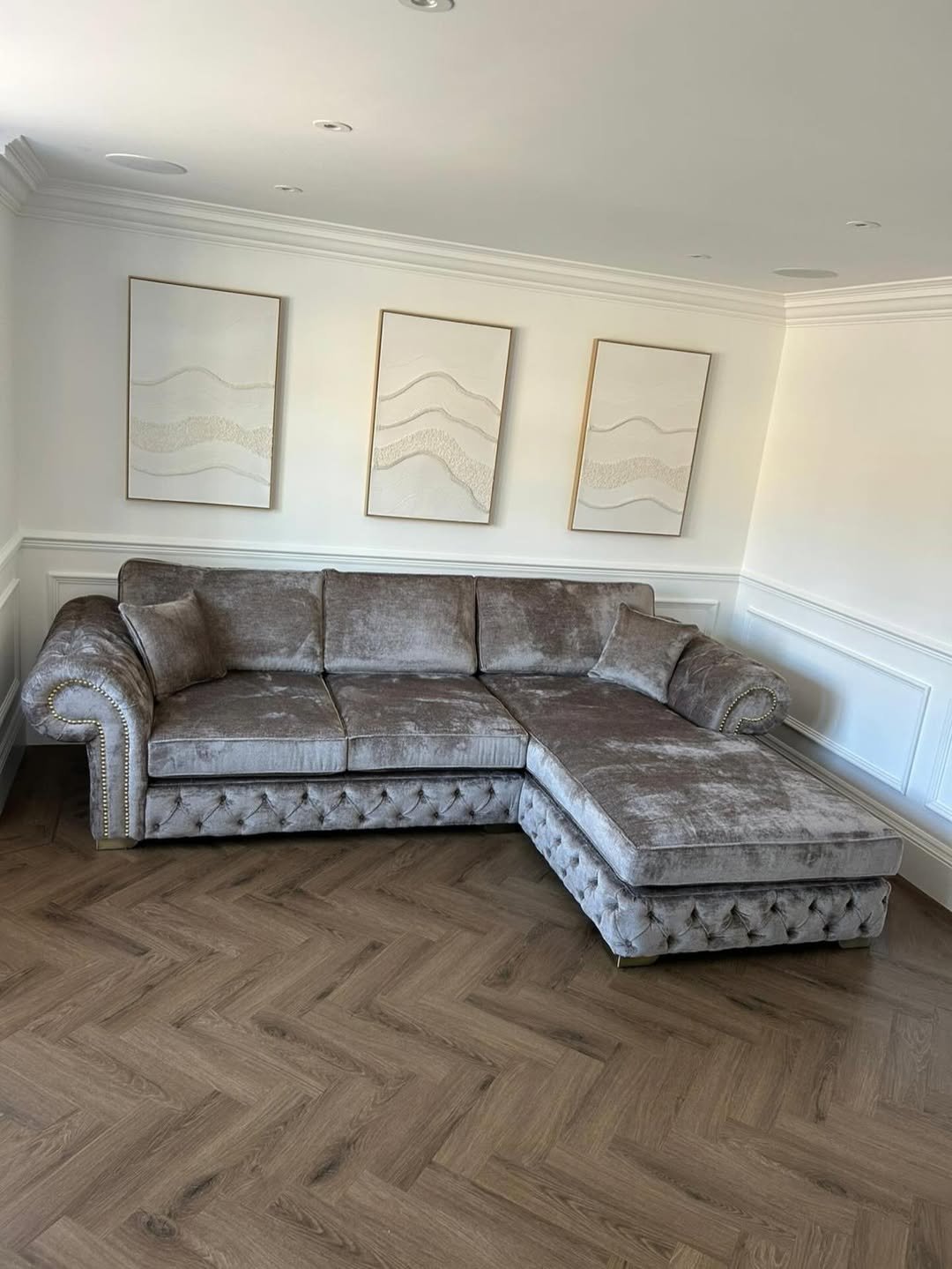
A sofa this size can read as one big block, and the fabric is what stops that. Crushed velvet, with its crinkled surface, looks silvery where it catches light and darker gray-brown in the creases. Three matching frames hung across about two thirds of the sofa’s length tie the wall to it, and the buttoned base and brass studs add the classic shape.
The Coffee Table That Hides Clutter
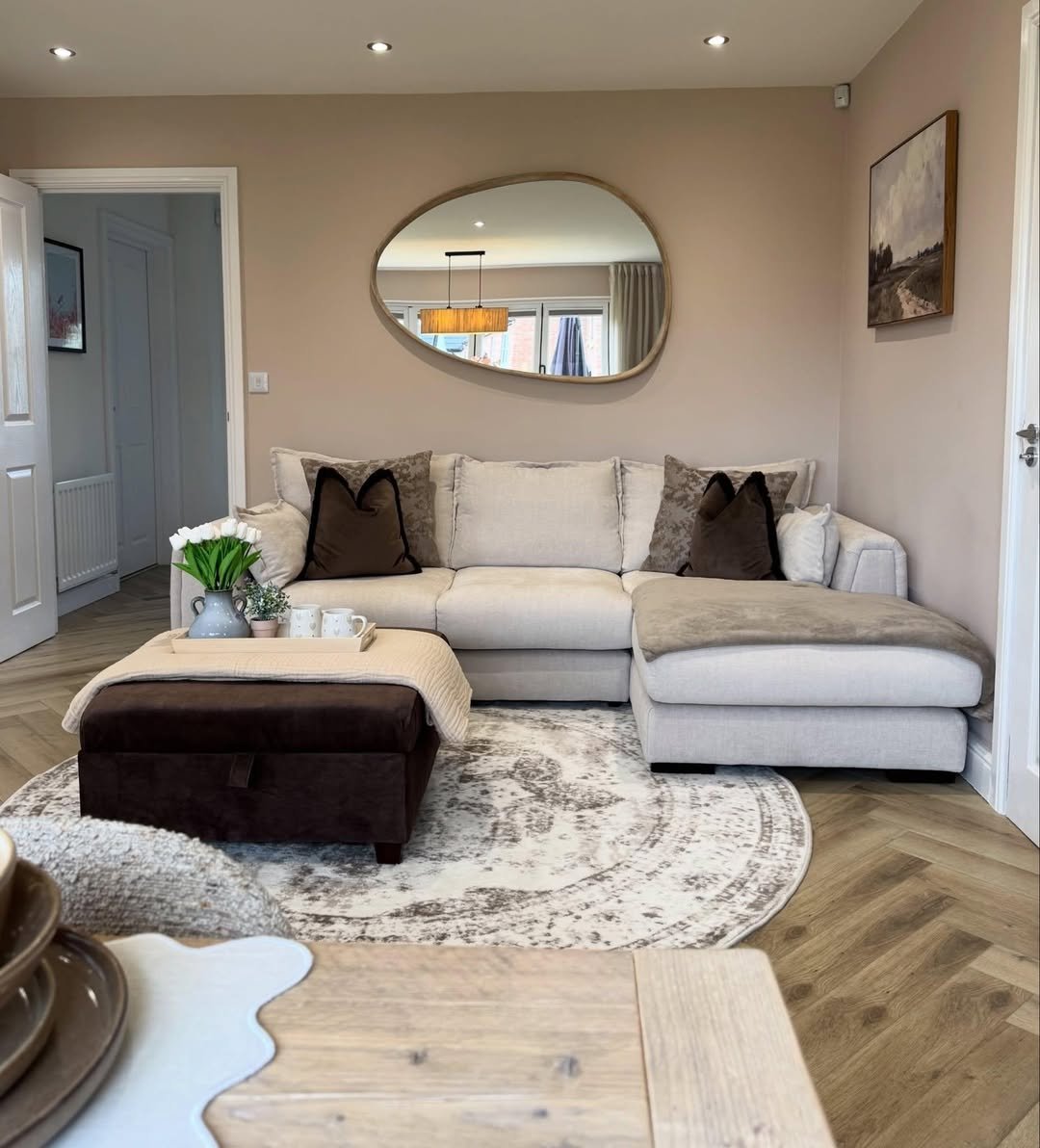
Where do the blankets and remotes go? Into the coffee table, if it’s an ottoman like this brown velvet one, since the strap on the lid is a handle for lifting it open. A light tray keeps the tulips and mugs steady on top, and the oval mirror reflects the window so the pink-beige walls stay bright. The same hide-it-away thinking works inside cabinets too.
Let Your Art Choose the Sofa Color
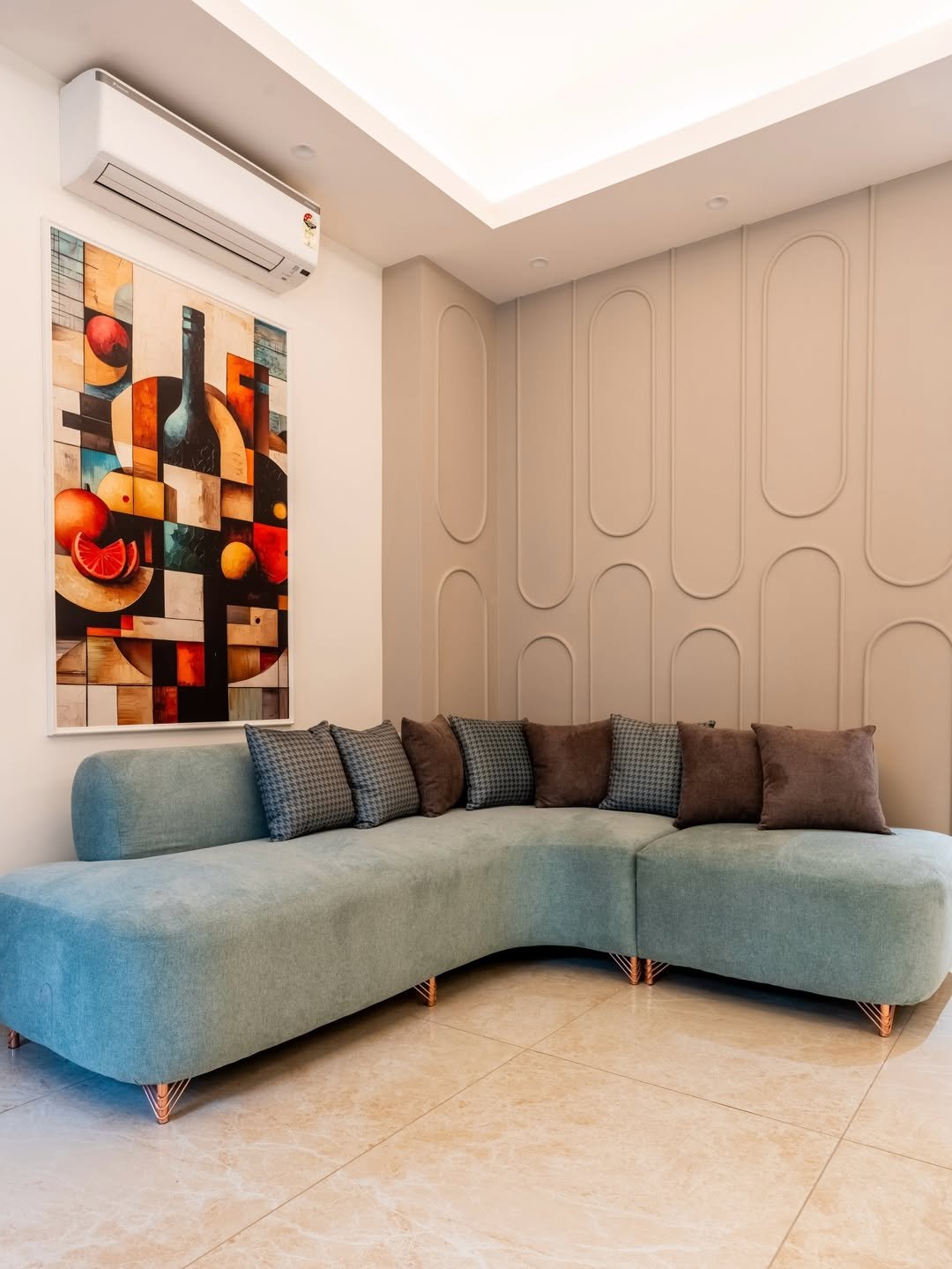
It should clash: a teal sofa, a painting full of orange and red, and a wall of raised pill-shaped panels. It doesn’t, because the teal echoes the bottle in the painting, the brown cushions borrow its earth tones, and the copper legs repeat its orange. Photograph your art before you shop, then match the sofa or a cushion to it.
Dark Green Without the Heavy Feel
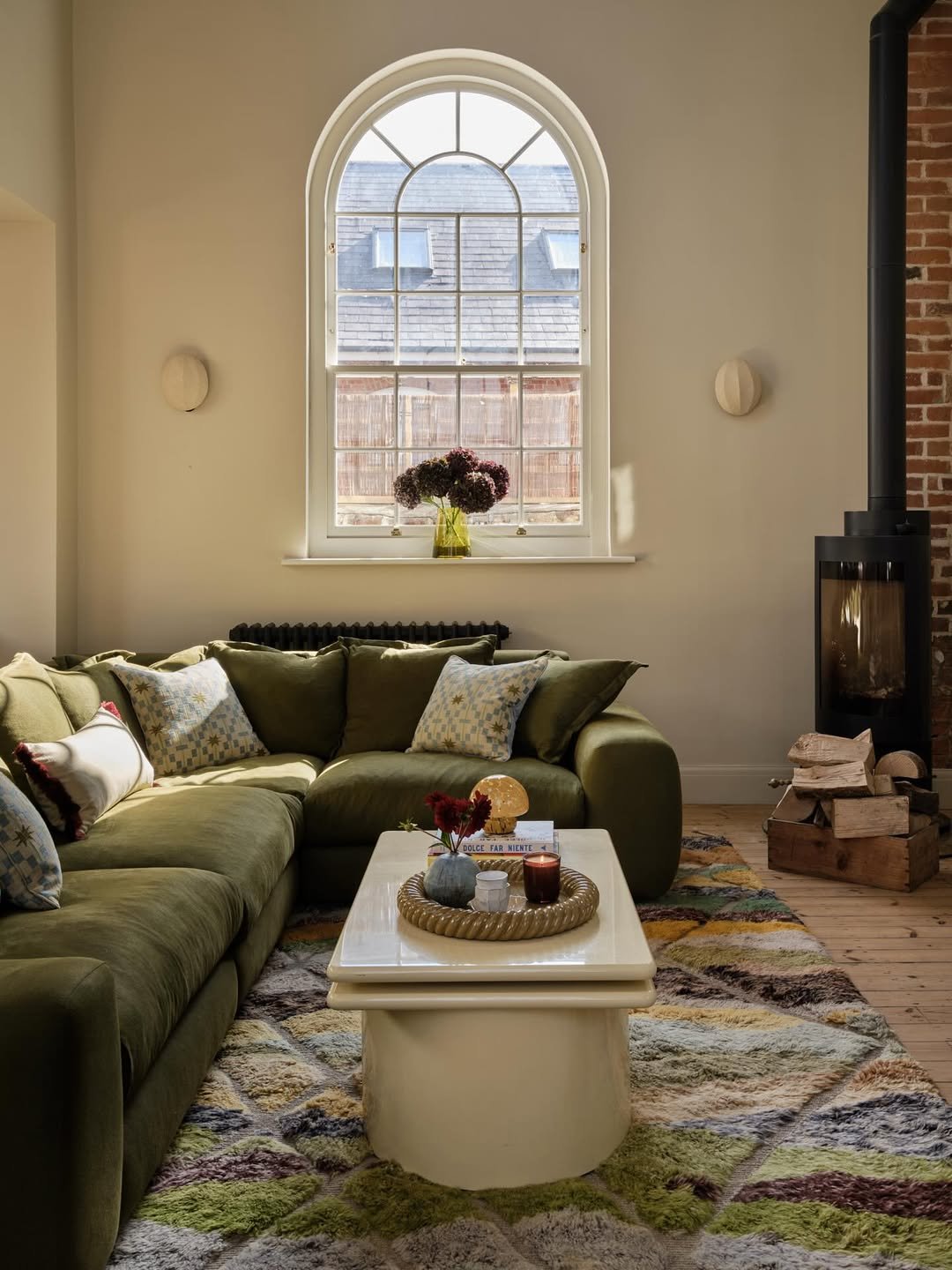
On a sunny afternoon, light from the arched window lands on the moss green sofa and the pine floor, and the dark seats still don’t feel heavy. The walls are warm cream, the coffee table is light and rounded, and the rug’s green repeats the sofa’s. If your room has brick like the wall beside that stove, this brick fireplace roundup shows how far it can go.
Move In First, Hang Art Later
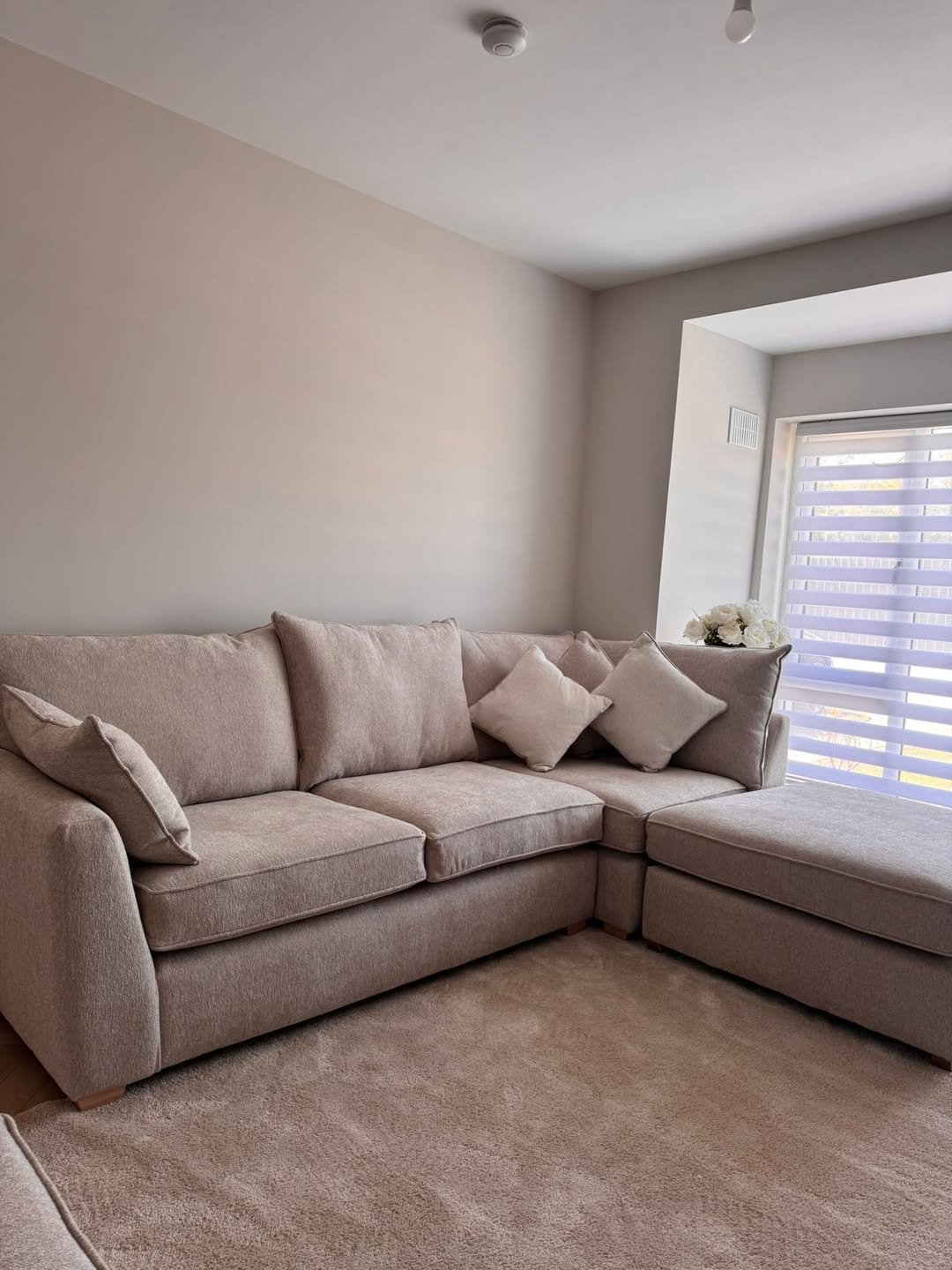
The wall behind this sofa is still bare, and the room already feels calm. The flecked weave, a mix of light and dark threads, breaks up crumbs and lint better than a smooth fabric, and its warm beige sits in the same family as the carpet and the wall. The footstool end gives you somewhere to stretch out. New place? Live with it a few weeks before choosing art.
Corner Seating That Leaves the Middle Open
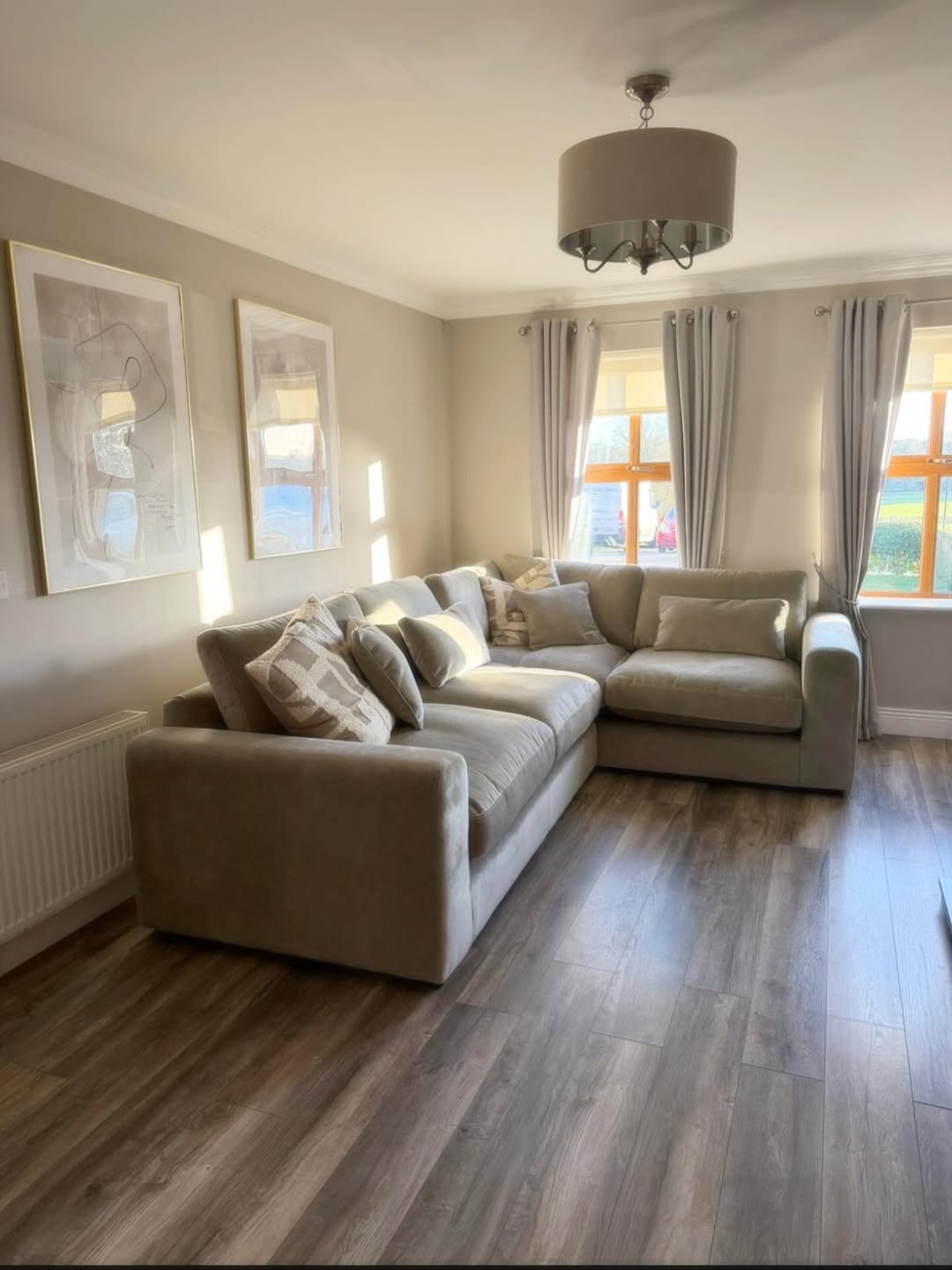
Tuck the sofa into the corner and the middle of the floor stays open for walking, a rug, or a coffee table. The taupe, a warm gray-brown, sits a shade or two off the wall color, so the sofa blends in instead of chopping the room in half. Two tall abstract prints in thin gold frames add shine without clutter, and gray curtains keep the windows soft.
Quiet Walls Let the Rust Shine
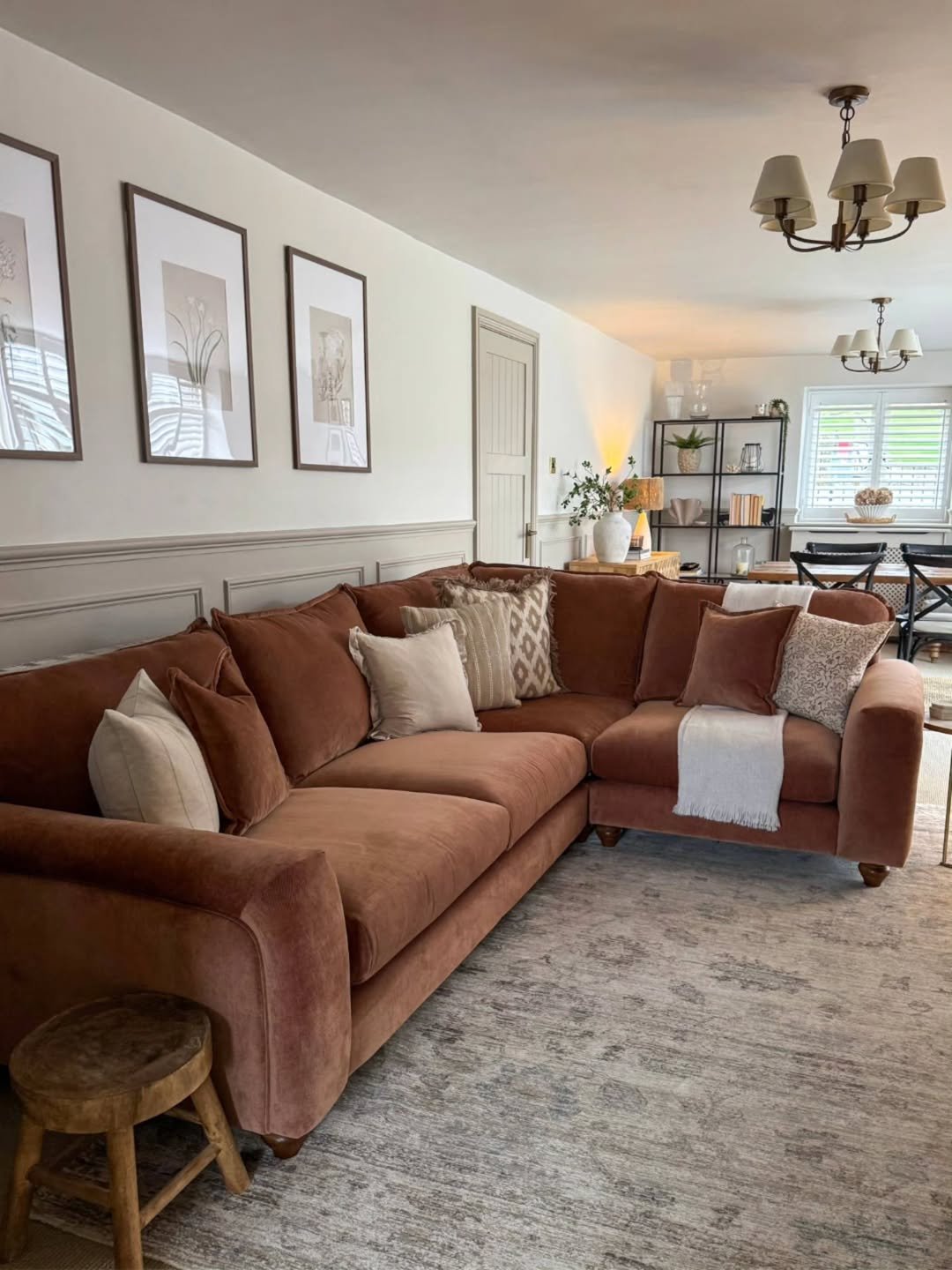
Is rust too bold for a living room? Not when everything around it stays quiet. White walls, soft gray-beige paneling, a gray rug, and a rustic wood stool give the sofa room to be the star. Mix plain rust velvet cushions with patterned cream ones, and lay a white fringed throw over one seat to break up all that color.
